Concerns to Ask Before Picking a Memory Care Facility
Business Name: BeeHive Homes of Plainview
Address: 1435 Lometa Dr, Plainview, TX 79072
Phone: (806) 452-5883
BeeHive Homes of Plainview
Beehive Homes of Plainview assisted living care is ideal for those who value their independence but require help with some of the activities of daily living. Residents enjoy 24-hour support, private bedrooms with baths, medication monitoring, home-cooked meals, housekeeping and laundry services, social activities and outings, and daily physical and mental exercise opportunities. Beehive Homes memory care services accommodates the growing number of seniors affected by memory loss and dementia. Beehive Homes offers respite (short-term) care for your loved one should the need arise. Whether help is needed after a surgery or illness, for vacation coverage, or just a break from the routine, respite care provides you peace of mind for any length of stay.
1435 Lometa Dr, Plainview, TX 79072
Business Hours
Choosing a memory care facility is hardly ever a quick choice. For many households, it begins with a call after a tough week, perhaps after a loss, a roaming episode, a medicine mix-up, or an expanding sense that home no more feels risk-free. The search can move fast from there. You kind "memory care near me" right into a phone, make a few visits, and suddenly you are attempting to compare locations that all audio caring, all assure safety, and all seem to have brightened brochures.
That is specifically why the right inquiries matter. A good memory care community should do more than look tidy and pleasant. It needs to be able to describe exactly how it handles confusion, routines, medication, habits adjustments, and household communication in such a way that really feels specific and credible. The distinction in between a location that is merely pleasurable and one that really comprehends dementia care commonly turns up in the details.

Families that have actually done this before generally say the very same point afterward: they desire they had asked a lot more, and quicker. Not nearly rates, but about the real daily experience. What happens at 2 a.m. If someone is disoriented? Exactly how do team reroute a resident who is anxious or dubious? What type of training do caretakers receive? These are the inquiries that separate a general senior care setup from a memory care program developed for people coping with cognitive change.

Start with the individual, not the brochure
Before you start visiting communities, it helps to go back and think about the individual who will certainly live there. Memory care is not one-size-fits-all. A resident in the early stages of dementia might require gentle cueing, predictable routines, and social involvement. Somebody with more advanced signs and symptoms may require assist with dressing, eating, toileting, and constant confidence. Some individuals speed all day. Some come to be quieter. Some have a long background of being social and dislike being alone. Others come to be flustered in teams and do much better in calm spaces.
A strong center should be able to talk about these differences without sounding generic. If you mention that your parent has sundowning, wanders, or gets upset throughout showering, do they respond with practical methods, or do they gloss over the concern? The best neighborhoods can describe how they adapt care plans and why certain approaches function far better than others.
It is likewise worth assuming beyond medical diagnosis. A resident who likes music might do well in a neighborhood that utilizes songs therapy or normal sing-alongs. Someone who as soon as gardened may really feel calmer in a safe outdoor yard. Somebody that talks gently may require personnel that hold your horses sufficient to wait and not hurry every discussion. Excellent memory care areas individuality, not just clinical need.
Questions that disclose how a facility in fact takes care of residents
When families tour memory care neighborhoods, the evident questions come up swiftly. What is the team ratio? What is the regular monthly cost? Exists a waiting listing? Those are useful inquiries, but they hardly ever inform the full story. The inquiries below usually expose much more about day-to-day live than a shiny tour ever before will.
- How do you assess each resident when they relocate, and exactly how frequently do you update the care plan?
- What dementia-specific training do caretakers and supervisors receive?
- How do you deal with straying, anxiety, refusals, or late-day confusion?
- What does a normal day appear like, from morning wake-up to bedtime?
- How do you keep family members educated when something changes?
That last inquiry issues more than lots of people expect. A great center ought to have the ability to inform you just how they interact small concerns before they end up being bigger ones. You wish to know whether a staff member notices subtle modifications in appetite, rest, state of mind, or flexibility, and whether that details makes it to the family immediately. In elder care, information issue. A tiny modification in habits can be the initial sign of infection, pain, or medication side effects.
If the team solutions appear scripted, maintain asking. If they state they use individualized regimens, request instances. If they say they redirect steadly, ask what that appears like when a person is distressed in the center of the night. Real memory care has structure. It is not simply a policy on paper.
Safety is not only concerning secured doors
Families commonly assume memory care means safe doors, and it normally does. However safety alone is not enough. A secure atmosphere in memory care ought to reduce complication, avoid injury, and support self-respect at the same time. A place can be locked and still be tough to live in. It can additionally be beautifully designed and still miss essential safety basics.
Pay attention to the layout throughout your visit. Are hallways easy to browse? Is lights also and bright enough without being rough? Are floorings devoid of glow or confusing patterns that might resemble openings to a person with dementia? Are washrooms close and plainly noted? These details are not minor. They can decrease drops, disappointment, and accidents.
Ask exactly how the facility manages emergencies. If a resident drops, just how promptly is the individual analyzed? If a resident leaves their room at night and ends up being dizzy, what happens following? If there is a power interruption or severe weather, what backup plans exist? Great senior living near me searches typically surface stunning structures, yet the building itself is only part of the formula. What matters is the system behind it.
It is likewise important to ask just how the staff balances safety with independence. Some neighborhoods over-restrict homeowners, which can make them extra confused or troubled. Others are also loose with guidance. The appropriate balance is normally noticeable in small means, like letting locals walk in protected yards, helping them establish the table, or encouraging secure choices instead of taking control of every task.
Ask concerning dishes, routines, and the small practices that form the day
Memory care is built out of ordinary minutes. Morning meal. Shower time. A stroll after lunch. A favored snack. A calm shift before bed. When a person lives with dementia, these minutes can either steady the day or make it unravel.
Ask exactly how meals are offered. Are homeowners provided choices without coming to be overwhelmed? Is food adapted for transforming cravings, ingesting problems, or fat burning? Can the cooking area fit favorite foods when a resident is no more consuming well? A thoughtful neighborhood comprehends that nutrition is not just about calories. It is commonly regarding convenience, memory, and cooperation.
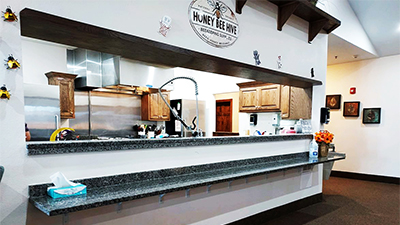
Routines are similarly important. Individuals with cognitive decline typically do better when life complies with an acquainted rhythm. Ask whether citizens wake and consume around similar times daily. Ask whether showers are offered at times when the resident is tranquil. Ask whether the facility changes for practices that matter, like resting later on, enjoying coffee prior to breakfast, or taking a long period of time to obtain ready.
This is where experience becomes visible. A sleek tour could reveal you a sunny dining-room and a calendar of activities, but the actual question is whether the rhythm of the day makes good sense for a person that can not quickly adapt to consistent adjustment. A strong memory care team knows that foreseeable framework can protect against a large amount of distress.
What to discover staffing, turnover, and consistency
One of one of the most important inquiries in any kind of memory care search is that really offers the care. Households usually concentrate on features, but staff consistency shapes the resident experience more than nearly anything else. People with dementia have a tendency to react best when they acknowledge faces and regimens. When team turnover is high, residents might come to be much more nervous, extra withdrawn, or tougher to reassure.
Ask how long caretakers typically stay at the center. Ask whether the exact same team job normal shifts or whether the timetable adjustments typically. Ask how many straight care team get on the floor during day, evening, and overnight hours. The exact staffing pattern can vary by community, yet you desire a clear response, not an obscure pledge that "somebody is always about."
It aids to see just how staff engage with locals throughout your visit. Do they speak gradually and clearly? Do they approach from the front, make eye contact, and make use of the resident's name? Do they seem rushed or sidetracked? You can learn a lot in five minutes by observing whether caregivers appear to know the homeowners as people.
If a center uses respite care, ask that covers temporary keeps and whether momentary citizens obtain the same level of focus as full-time residents. Respite care can be invaluable after a hospitalization or during a caretaker's recuperation, yet the quality must correspond. A short keep is not a factor to reduce the standard.
The tough questions regarding rates and contracts
Money is usually the most demanding component of the search, partly because rates in elder care can be made complex. Memory care rates might be estimated as a base cost with included charges for drug administration, individual care, companions to meals, incontinence assistance, or higher supervision levels. 2 areas can look similar theoretically and end up costing extremely various quantities each month.
Ask what is included in the base price, and request for the solution in composing. Does the fee include dishes, utilities, housekeeping, laundry, activities, and transport? Exist separate costs for showering aid or behavior support? What causes a rate enhance? Under what scenarios might a resident be asked to transfer to a different level of care?
This is one of the places where households can conserve themselves a lot of problem by being direct. Some neighborhoods are clear and simple to compare. Others make it difficult to understand the actual regular monthly cost till the contract remains in front of you. Do not feel awkward requesting a sample expense or a line-by-line explanation. If you are contrasting memory care near me alternatives, quality issues as long as charm.
Also inquire about down payment policies, notification periods, and discharge rules. If your loved one's demands alter unexpectedly, you wish to know exactly how the facility reacts. A community that can not clarify those terms plainly may not be the best fit.
Visit at more than one time of day
A facility can feel really various at various hours. Mid-morning trips often show the most effective version of a community, with activities underway and locals revitalized. That serves, however not enough. If possible, visit once in the morning and as soon as later in the day, when tiredness may be setting in and sundowning behaviors are most likely to appear.
Pay focus to the power of the structure. Is it tranquil or chaotic? Do residents appear engaged, bored, or agitated? Are employee noticeable and readily available, or does the area appear quiet in such a way that feels understaffed as opposed to peaceful? Notice the odor, the noise degree, and whether people are communicating normally or resting alone for lengthy stretches. These information can tell you more than a formal presentation.
If you can, consume a dish there or visit during one. Eating time frequently exposes just how team assistance locals who require aid, who consume gradually, or that end up being bewildered voluntarily. It also reveals whether the community treats dishes senior care near me BeeHive Homes of Plainview as a rushed job or a significant part of the day.
Questions that aid you evaluate whether it is the appropriate fit
By the moment family members have actually toured numerous areas, the questions become sharper. They are less regarding amenities and more about fit. Memory care is deeply personal, and what works well for someone might not work at all for another.
You may discover yourself asking whether the staff truly understands your loved one's background, whether the atmosphere really feels tranquil sufficient, and whether you can imagine that individual living there on a tough day, not just on a good one. That is the genuine test.
A few concerns can help bring that image into focus:
- How do residents hang around when they do not wish to join team activities?
- What happens when a person is having a difficult day and refuses care?
- How do you sustain homeowners with various social, spiritual, or language needs?
- What makes this community various from other memory care facilities nearby?
- If my loved one's requirements increase, exactly how do you deal with that transition?
These concerns work because they force the discussion out of advertising language and right into lived reality. They also show whether the staff sees dementia care as a partnership, not simply a service.
Trust your impulses, but confirm them
Families typically claim they recognized within a few minutes whether an area felt right. Instinct does issue. If a community really feels warm, orderly, and considerate, that is worth focusing on. If the team seems evasive or the environment really feels off, do not talk yourself out of that response just because the location has an excellent reputation.
Still, reactions function best when coupled with cautious confirmation. A grinning tour guide can not answer every concern on behalf of the whole team. A lovely activity calendar does not guarantee that activities actually take place. A safe entry does not prove citizens are involved, fed well, and treated with perseverance. The work is to keep both your heart and your note pad open.
If you are comparing elder care choices for a partner, parent, or various other member of the family, keep notes after every visit. Jot down certain responses, not just impressions. It is surprisingly simple to blend details after 2 or 3 trips, particularly when every place begins to blur together. If one area attracted attention since a registered nurse kept in mind a resident's name, or because the dining room really felt tranquil as opposed to loud, note that too.
The concerns that matter most after move-in
Choosing a memory care facility is not the goal. It is the start of a brand-new type of partnership. As soon as your loved one moves in, ask just how you will certainly remain involved. Will there be care plan conferences? Can member of the family call with questions? Exactly how are concerns intensified? What is the best way to share helpful details about behaviors, causes, favored music, or relaxing routines?
Families are usually most helpful when they provide context the staff would not otherwise understand. Possibly your mother works out after folding towels. Perhaps your father comes to be nervous if he really feels rushed in the morning. Perhaps a favorite covering, book, or radio terminal helps. These small information can make an actual distinction in memory care, especially throughout the first weeks of adjustment.
A good center will certainly welcome that info and use it. It will not act as though family members participation is inconvenient. The best neighborhoods understand that families are not going to from the sidelines. They are part of the care team, even when the care group is lugging the everyday work.
Choosing the appropriate memory care neighborhood takes time, and it should. The goal is not to discover an area that simply looks pleasurable throughout a tour. The goal is to find a home where your loved one will certainly be seen, understood, and sustained via the altering truths of dementia. Ask direct concerns. Pay attention for specifics. Watch just how individuals treat one another. The responses are usually there if you recognize where to look.
BeeHive Homes of Plainview provides assisted living care
BeeHive Homes of Plainview provides memory care services
BeeHive Homes of Plainview provides respite care services
BeeHive Homes of Plainview supports assistance with bathing and grooming
BeeHive Homes of Plainview offers private bedrooms with private bathrooms
BeeHive Homes of Plainview provides medication monitoring and documentation
BeeHive Homes of Plainview serves dietitian-approved meals
BeeHive Homes of Plainview provides housekeeping services
BeeHive Homes of Plainview provides laundry services
BeeHive Homes of Plainview offers community dining and social engagement activities
BeeHive Homes of Plainview features life enrichment activities
BeeHive Homes of Plainview supports personal care assistance during meals and daily routines
BeeHive Homes of Plainview promotes frequent physical and mental exercise opportunities
BeeHive Homes of Plainview provides a home-like residential environment
BeeHive Homes of Plainview creates customized care plans as residents’ needs change
BeeHive Homes of Plainview assesses individual resident care needs
BeeHive Homes of Plainview accepts private pay and long-term care insurance
BeeHive Homes of Plainview assists qualified veterans with Aid and Attendance benefits
BeeHive Homes of Plainview encourages meaningful resident-to-staff relationships
BeeHive Homes of Plainview delivers compassionate, attentive senior care focused on dignity and comfort
BeeHive Homes of Plainview has a phone number of (806) 452-5883
BeeHive Homes of Plainview has an address of 1435 Lometa Dr, Plainview, TX 79072
BeeHive Homes of Plainview has a website https://beehivehomes.com/locations/plainview/
BeeHive Homes of Plainview has Google Maps listing https://maps.app.goo.gl/UibVhBNmSuAjkgst5
BeeHive Homes of Plainview has Facebook page https://www.facebook.com/BeeHivePV
BeeHive Homes of Plainview has an YouTube page https://www.youtube.com/@WelcomeHomeBeeHiveHomes
BeeHive Homes of Plainview won Top Assisted Living Homes 2025
BeeHive Homes of Plainview earned Best Customer Service Award 2024
BeeHive Homes of Plainview placed 1st for Senior Living Communities 2025
People Also Ask about BeeHive Homes of Plainview
What is BeeHive Homes of Plainview Living monthly room rate?
The rate depends on the level of care that is needed. We do an initial evaluation for each potential resident to determine the level of care needed. The monthly rate is based on this evaluation. There are no hidden costs or fees
Can residents stay in BeeHive Homes until the end of their life?
Usually yes. There are exceptions, such as when there are safety issues with the resident, or they need 24 hour skilled nursing services
Do we have a nurse on staff?
No, but each BeeHive Home has a consulting Nurse available 24 – 7. if nursing services are needed, a doctor can order home health to come into the home
What are BeeHive Homes’ visiting hours?
Visiting hours are adjusted to accommodate the families and the resident’s needs… just not too early or too late
Do we have couple’s rooms available?
Yes, each home has rooms designed to accommodate couples. Please ask about the availability of these rooms
Where is BeeHive Homes of Plainview located?
BeeHive Homes of Plainview is conveniently located at 1435 Lometa Dr, Plainview, TX 79072. You can easily find directions on Google Maps or call at (806) 452-5883 Monday through Sunday 9:00am to 5:00pm
How can I contact BeeHive Homes of Plainview?
You can contact BeeHive Homes of Plainview by phone at: (806) 452-5883, visit their website at https://beehivehomes.com/locations/plainview/, or connect on social media via Facebook or YouTube
Running Water Draw Regional Park offers shaded walking paths and open green space where residents in assisted living, memory care, senior care, elderly care, and respite care can enjoy gentle outdoor relaxation.
Ends · MARTINUKTV977